
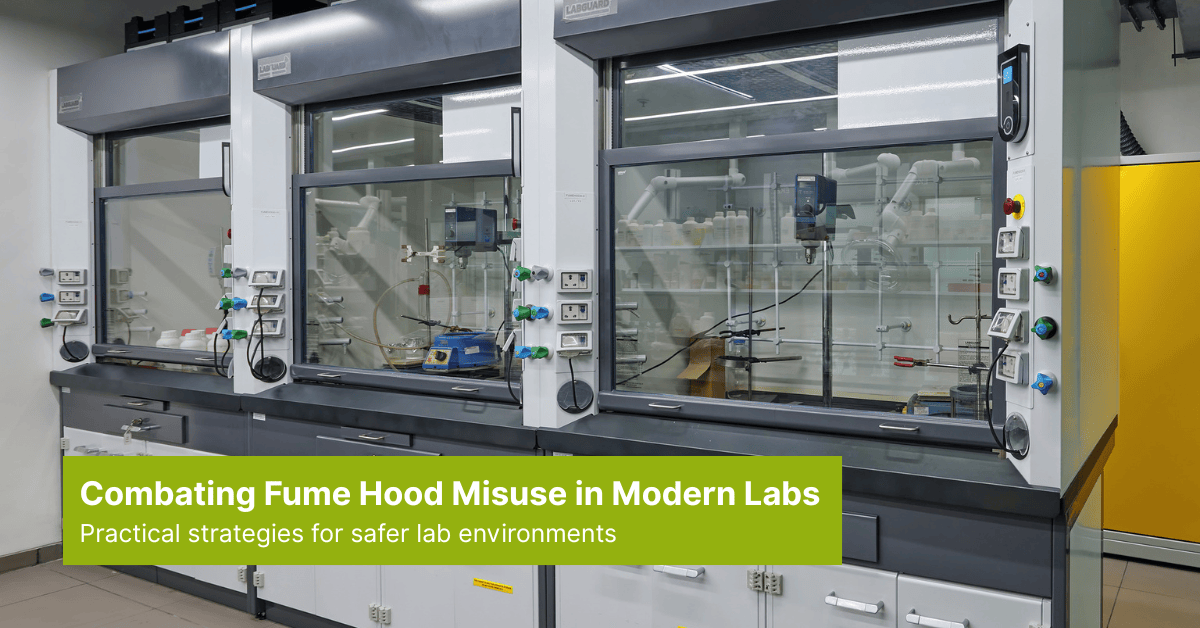
Laboratory fume hoods are vital safety devices, but their effectiveness is frequently undermined—not by design flaws, but by misuse and poor user behavior. Despite significant technological improvements, the human factor remains the weakest link in fume hood safety.
This guide explores the most common behavioral issues, the risks they pose, and what lab owners and managers can do to foster a culture of safe, consistent fume hood usage. Notes have been added throughout to show how the EKá Fume Hood by LabGuard is engineered to help address these common challenges.
Common User Behavior Problems Undermining Fume Hood Safety
1. Incorrect Sash Height
Users frequently leave the sash too high while working or forget to close it after use—significantly compromising face velocity and containment.
What You Can Do
- Install visible sash height markers & sash locks
- Train users to work with the sash at the recommended level
- Use auto-sash or sash alarm systems for critical labs
EKá Advantage
EKá includes clearly marked sash height guides and offers an optional auto-sash mechanism that closes the sash when not in use. This minimizes user error and maximizes containment efficiency.
2. Using the Hood as Storage
Storing chemicals, glassware, or personal items inside the hood obstructs airflow, increases turbulence, and raises fire or spill risks.
What You Can Do
- Reinforce a “no-storage in the hood” policy
- Provide chemical storage under the hood for corrossive/ flammable solvents.
- Add reminders on or near the hood workspace
EKá Advantage
With its 25% more workspace and default under-bench ventilated storage options (corrossive/ Solvent), EKá supports a clutter-free environment, making it easier to follow best practices.
3. Rapid or Erratic Movements
Fast or jerky hand motions near the hood opening disrupt airflow patterns, increasing the likelihood of fumes escaping into the lab.
What You Can Do
- Train users to move deliberately and slowly when working near the sash
- Demonstrate airflow disruption using smoke tests during training
- Use floor markings to maintain appropriate working distance
EKá Advantage
EKá’s user friendly design of gas lines and sink in the front and aerodynamic balancing reduce turbulence and maintain stable containment, even during minor movement deviations.
4. Ignoring Alarms and Airflow Monitors
Alarms are often muted, ignored, or misunderstood—leading users to continue working in unsafe conditions without realizing it.
What You Can Do
- Educate users on the meaning of alarm indicators
- Include airflow monitoring in SOPs and training
- Perform regular functionality checks
EKá Advantage
EKá is equipped with real-time airflow monitors and audible-visual alerts that clearly notify users of unsafe conditions. The system is designed to be easily understood and hard to ignore.
5. Poor Housekeeping and Overcrowding
Overfilled hoods make it difficult to work safely and impair containment performance. Clutter also increases spill and contamination risk.
What You Can Do
- Schedule periodic housekeeping checks
- Keep chemicals/ apparatus 6 inches (150mm) behind the sash
- Include fume hood hygiene in lab audits
EKá Advantage
EKá features easy-to-clean surfaces, rounded edges, and spacious working areas to encourage tidy setups and simplify maintenance.
6. Lack of Training and Awareness
Many users—especially students or newly hired staff—are unfamiliar with correct fume hood operation, leading to unsafe habits over time.
What You Can Do
- Conduct structured onboarding and annual refresher sessions
- Display best practice visuals near hoods
- Appoint trained “fume hood champions” in each team
EKá Advantage
The intuitive layout, clear visual indicators, and user-friendly controls of EKá act as natural guides for correct use—especially helpful in high-traffic labs with frequent user turnover.
Creating a Culture That Reinforces Safe Use
Establishing good fume hood practices isn’t just about protocols—it’s about creating a culture of safety through environment, leadership, and reinforcement. Here’s what lab leaders can do:
- Incorporate fume hood checks into daily startup/shutdown routines
- Encourage reporting of unsafe conditions without fear of blame
- Reward teams that consistently demonstrate good lab behavior
- Upgrade to equipment that reduces reliance on memory or training alone
Additional EKá Safety Features That Reinforce Safe Behavior
Beyond solving individual issues, the EKá Fume Hood is designed to promote long-term lab safety through its thoughtful, standards-driven engineering:
- ASHRAE 110:2016 and EN 14175 certified safe performance for reliable & safe containment
- Chemical-resistant construction for long-term durability
- Built-in Unique Safety features like built-in fire extinguisher, sash locks, cable entry ports, IP-55 sockets, emergancy stop
- Modular, service-friendly design that simplifies preventive maintenance
- Quiet, low-vibration operation for comfort and focus in the lab
Whether in a teaching lab or high-throughput pharmaceutical environment, EKá makes it easier to build and sustain safe user behavior—not just by alerting users, but by guiding them toward the right choices every time they interact with the hood.
