
Redefining Lab Safety and Efficiency with VAV Systems
In today’s cutting-edge laboratories, air quality and energy efficiency are essential for ensuring the safety of researchers and maintaining a productive environment. That’s where Variable Air Volume (VAV) systems come in. At LabGuard, we understand the vital role of high-performance VAV systems, engineered to improve safety and efficiency while reducing energy costs.
1. Understanding Variable Air Volume (VAV) Systems
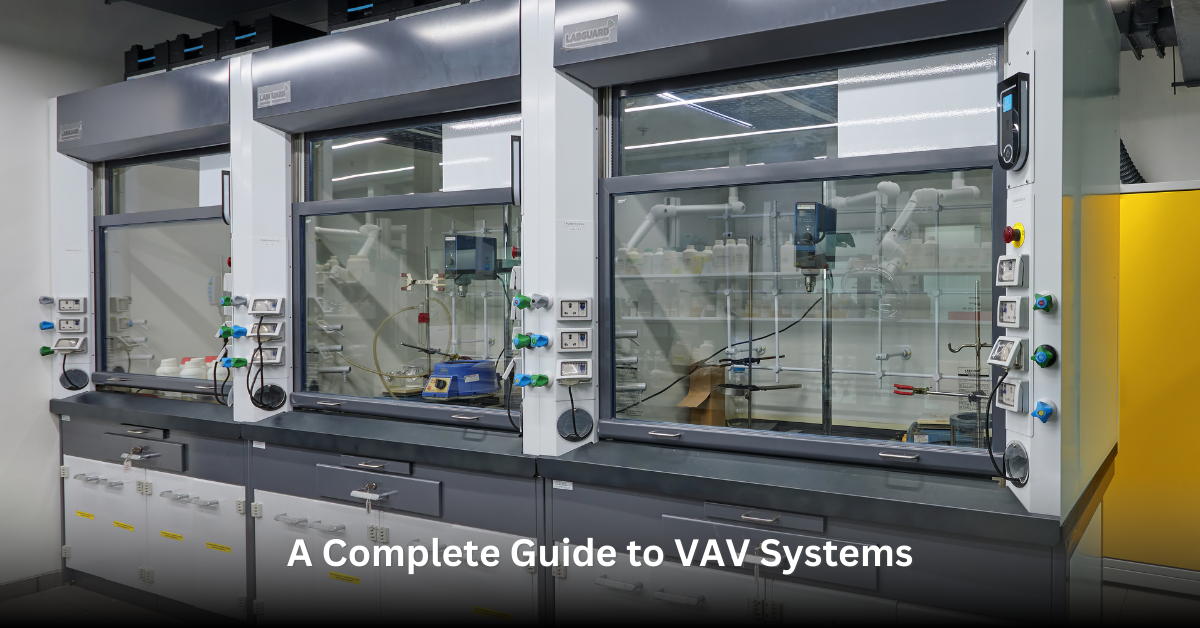
A Variable Air Volume (VAV) system is a ventilation automation technology that adjusts supply & exhaust airflow based on demand, optimizing both air quality and energy use. In labs, VAV systems are instrumental in maintaining safe air quality around fume hoods, where hazardous chemicals are handled. By managing airflow precisely, VAV systems help to prevent the escape of harmful fumes, maintaining safe working conditions and saving precious energy.
2. Why VAV Systems Matter in Laboratory Environments
Laboratories are unique environments requiring stringent air quality standards. Traditional ventilation systems, such as Constant Air Volume (CAV) systems, often result in energy waste and inconsistent air quality for conditioned labs. VAV systems, however, are designed to adjust airflow as needed, ensuring that air exchange is efficient and safe without unnecessary energy expenditure. This adaptive technology is critical for labs handling chemicals, biological materials, and other hazardous substances.
3. The Advantages of VAV Systems for Lab Efficiency and Safety
Here are several compelling reasons to choose VAV systems over conventional ventilation solutions:
- Reduced Capex and Opex: The capex reduces significantly because you invest in much lower capacity HVAC systems on day one. Also, by providing air as needed, VAV systems can reduce energy consumption by up to 50%, compared to CAV systems, leading to substantial savings on energy bills.
- Enhanced Safety: VAV systems quickly respond to changes in airflow demand, keeping the workspace free from harmful chemical fumes and creating a safer environment for researchers.
- Extended Equipment Lifespan: Operating only when necessary, VAV systems reduce wear and tear on HVAC equipment, extending its operational life.
4. Key Features of VAV Systems for Optimal Performance
- Automatic Sash Closing Systems: Including Automatic sash closing systems will ensure that you save energy thru VAV, irrespective of the user keeping sashes open.
- Occupancy Sensors: Advanced VAV systems may include occupancy sensors that adjust ventilation based on room occupancy, further optimizing energy use.
- System Integration: Many VAV systems can be integrated into a building management system (BMS), allowing for centralized monitoring, control and trends.
5. VAV vs. Constant Air Volume (CAV): Making the Switch
While CAV systems provide a steady volume of air regardless of demand, VAV systems are dynamic, adapting airflow based on usage, which is particularly useful in labs where airflow needs can fluctuate significantly. Switching from CAV to VAV offers substantial advantages:
- Cost Savings: Reduced energy usage means lower operational costs in the long run.
- Improved Comfort: VAV systems can adjust to maintain consistent air quality, creating a more comfortable environment for lab personnel.
- Better Control of Air Quality: With VAV systems, labs can precisely manage air exchanges, reducing the risk of contamination and exposure to hazardous substances.
6. Choosing the Right VAV Solution for Your Lab
Selecting a VAV system that aligns with your lab’s specific needs is crucial. Important factors include:
- System Compatibility: Ensure the VAV system integrates with your existing HVAC and building management systems.
- Certification and Standards Compliance: Look for systems that meet recognized global standards, ensuring your lab adheres to regulatory requirements.
- Scalability and Flexibility: A good VAV system should be adaptable to changes in lab usage and layout, supporting growth and varied lab applications.
- Expert Support and Maintenance: Opt for systems that come with reliable support and maintenance services to ensure optimal performance and longevity.
7. LabGuard’s Expertise in VAV Systems
At LabGuard, we are proud to offer advanced VAV systems tailored to meet the exacting demands of laboratory environments. Our VAV solutions are designed with safety, efficiency, and compliance at the forefront:
- Stringent Testing and Certification: LabGuard’s VAV systems comply with best global certifications, providing you with confidence in air quality and safety standards.
- High-Quality Materials and Design: Built for durability and reliability, our systems are made to withstand the harsh chemicals in the laboratory environments.
- End-to-End Support: From consultation to installation, LabGuard provides comprehensive support to help you integrate and maintain your VAV system.
With LabGuard as your partner, you gain not only advanced technology but also the assurance that your lab’s air quality and safety standards are in expert hands.
A Safer, More Efficient Lab with VAV Systems
In the ever-evolving world of laboratory safety and efficiency, Variable Air Volume (VAV) systems stand out as a smart, sustainable choice. At LabGuard, we’re dedicated to supporting labs with high-performance VAV systems that offer precision, adaptability, and cost-effectiveness. Join us in taking your lab’s safety and operational efficiency to the next level.
Ready to upgrade your lab’s safety and efficiency? Contact LabGuard to learn more about our VAV solutions and how they can benefit your lab.
