
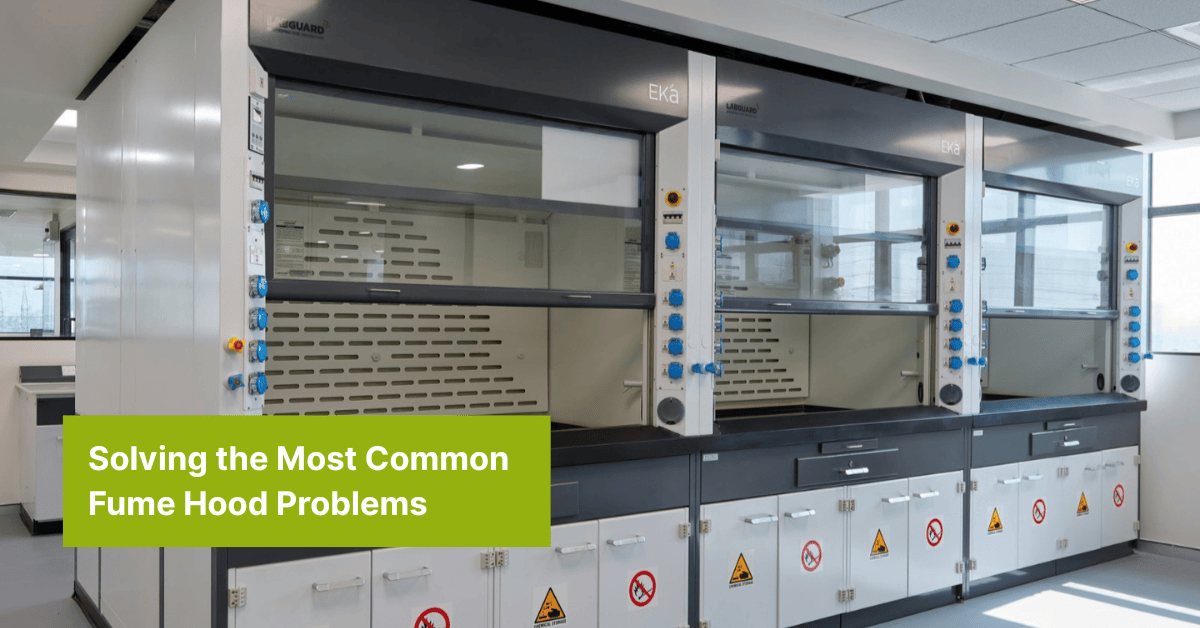
Fume hoods are the unsung heroes of modern laboratories—protecting researchers from toxic fumes, volatile chemicals, and unsafe environments. But even the most advanced hoods can fall short if not selected, installed, or maintained properly.
In 2025, as labs across pharma, chemicals, academia, and testing sectors push for higher safety standards, several recurring challenges continue to plague fume hood performance. The good news? Almost all of them can be avoided with the right awareness and planning.
Here’s a breakdown of the most common fume hood issues in 2025—and how your lab can avoid them.
1. Inadequate Suction
The Problem:
One of the top complaints across Indian labs is that the fume hood fails to contain fumes effectively. Inadequate supply air, exhaust blower performance, blocked ducts, or incorrectly set dampers lead to fumes leaking into the lab.
How to Avoid It:
- Ensure proper installation and commissioning with third-party airflow testing (ASHRAE 110 or EN-14175 recommended)
- Conduct regular air flow checks (quarterly or bi-annually)
- Train users to avoid overloading the hood and keep work at least 6 inches inside
- Don’t ignore airflow alarms—treat them as early warnings
2. Misuse of Sash and Poor User Behavior
The Problem:
Users often work with the sash too high (or fully closed), store chemicals inside, or block airflow with large equipment—all of which compromise containment.
How to Avoid It:
- Add clear sash height markers for ideal working positions
- Conduct short safety refreshers quarterly for lab staff
- Use hoods with auto-sash systems or alerts if left open
3. Condensation, Humidity & Weather Damage
The Problem:
In humid regions (Mumbai, Chennai, Kolkata, Vizag), moisture buildup inside hoods leads to corrosion, reduced airflow, and even water entering the blower system during monsoons.
How to Avoid It:
- Design supply air system with proper temperature and humidity control
- Ensure ducts are properly sized and avoid sharp bends
- Install drain ports in blower casings and keep them clear
- Ask your supplier about zero shut dampers to avoid external air entry to the labs thru exhaust blower
4. Corrosion and Rusting in Acid-Heavy Labs
The Problem:
Labs that handle acids, solvents, or corrosive vapors (e.g. jewellery testing, mining, agrochemicals) report premature corrosion—especially if metal-lined hoods are used.
How to Avoid It:
- Use polypropylene-lined or fully PP fume hoods for acid digestion and similar applications
- Choose corrosion-resistant coatings
- Opt for scrubbers or neutralizers in high-fume environments
- Schedule liner inspections annually
5. Filter Neglect in Ductless Hoods
The Problem:
Ductless hoods seem convenient—until filters saturate and toxic vapors break through, unnoticed. Most users either delay replacement or forget altogether.
How to Avoid It:
- Always ask for filter saturation indicators or alarms (Standard offering in Eka- Green)
- Replace filters per filter saturation indicator—don’t wait for smell or signs
- Use ductless hoods, only for known chemical usage
- If unsure, go for ducted hoods for unknown chemical mixes
6. Noise and Vibration During Operation
The Problem:
Hoods that vibrate or roar disrupt lab work, affect sensitive instruments, and usually indicate deeper mechanical problems.
How to Avoid It:
- Invest in low-noise direct drive blowers
- Size the duct big enoigh to avoid air cutting noise
- Include anti-vibration dampers in installation
- Choose fume hood hoods tested for noise performance during procurement
7. Poor After-Sales Support and Maintenance
The Problem:
A fume hood is only as good as the team that services it. Labs often struggle to find parts, schedule repairs, or get timely support from vendors.
How to Avoid It:
- Ask for after-sales support details before purchasing
- Prioritize vendors with a PAN-India service presence
- Sign an AMC with periodic calibration and preventive maintenance
- Avoid un-certified manufacturers who do not understand the product and its troubleshooting
How the EKá Fume Hood by LabGuard Helps Solve These Problems
As these challenges become more visible in 2025, EKá Fume Hood by LabGuard emerges as a trusted, high-performance solution—engineered specifically to meet India’s lab safety and operational demands.
Here’s how EKá addresses each issue:
Common Issue | How EKá Fume Hood Helps |
|---|---|
Inadequate Suction or Airflow | ASHRAE 110:2016 & EN 14175 certified; aerodynamic design ensures uniform containment |
Unsafe Sash Use | Smooth counterbalanced sash with clear markings; optional auto-sash and alarm integration |
Condensation & Weather Disruption | Drain ports, anti-condensation ducts, and rain-resistant blower designs for Indian climates |
Corrosion in Harsh Environments | Multiple corrosion-resistant linings: PP, FRP, SS316, epoxy-coated interiors |
Filter Saturation (Ductless) | Advanced filter monitoring with saturation alarms; quality filters and defined replacement cycles |
Noise and Vibration | Low-noise operation; remote blower compatibility; vibration-reducing design elements |
Maintenance & After-Sales Support | PAN-India support team; AMC availability; modular construction for easy service access |
Whether you’re designing a new lab or retrofitting an existing one, EKá combines safety, durability, and serviceability—making it one of the smartest choices for Indian labs today.
